

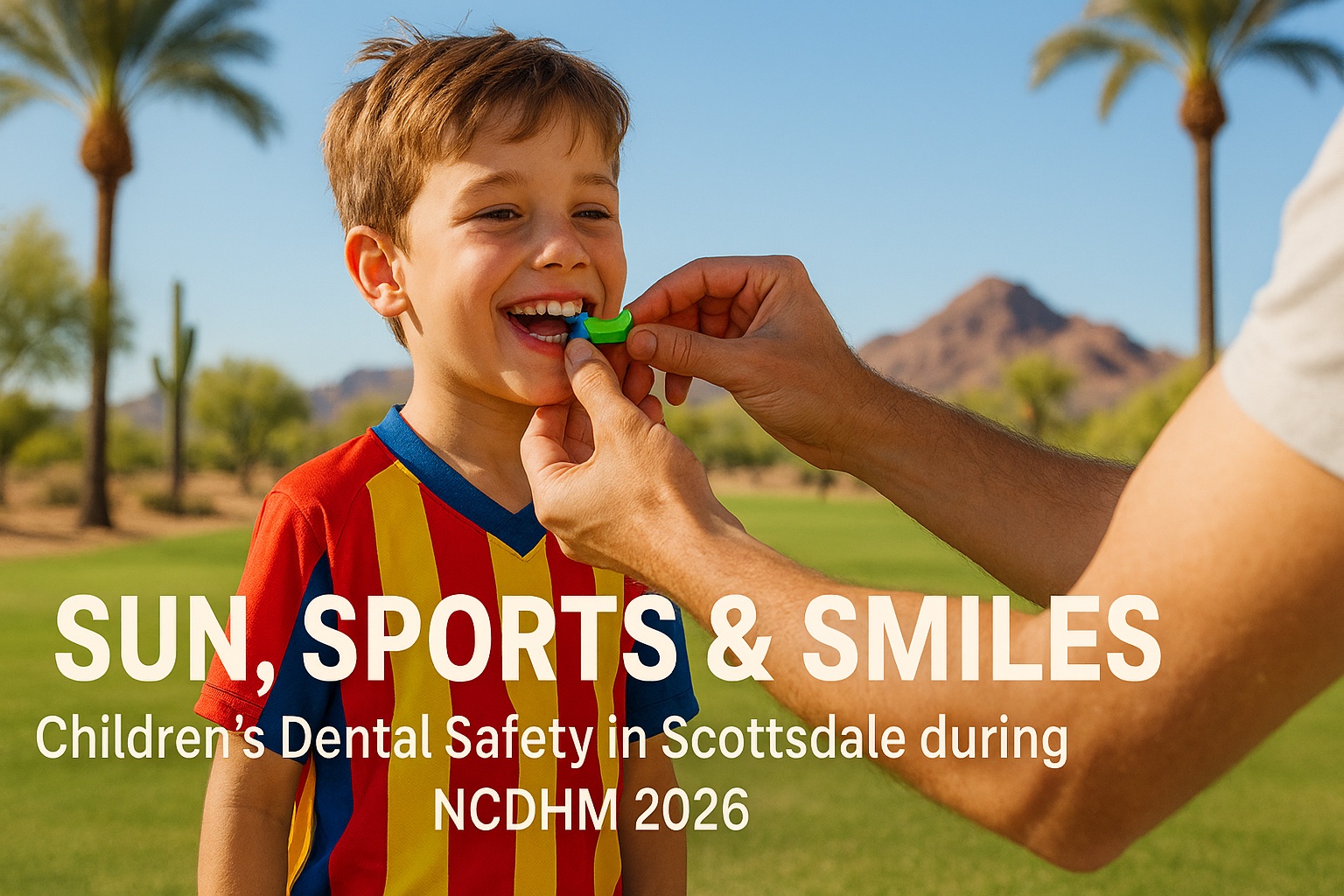
February is National Children’s Dental Health Month, and if you have kids, you already know how active they are. From youth soccer games at Chaparral Park to baseball games near Indian Bend Wash to hours spent at our local pools, our kids are always on the move. The problem, of course, is that we forget one thing when our kids are so active: dental health. Mouthguards get forgotten, water bottles are filled with sports drinks, and those falls on the playground? They can crack a tooth faster than you’d think.
This isn’t about scaring you; it’s about being prepared. It is a good time to think about our children’s dental health and make small adjustments to support a healthy smile all year long.
Why February Matters for Your Child’s Teeth
National Children’s Dental Health Month was begun in 1941 as a one-day event. It grew into a month-long program by 1981. The American Dental Association promotes it in February each year to raise awareness about children’s dental health. It is as simple as this – prevention is more effective than treatment.
As we lead a lifestyle where outdoor activities greatly influence our way of life, we face dental injuries in our children more often than we imagine. Many such injuries can be prevented.
Your child’s primary teeth are not just placeholders for their permanent ones. They also help permanent teeth develop correctly, encourage proper speech patterns, and enable kids to consume nutritious food. If these primary teeth are prematurely lost due to decay or trauma, it can lead to future problems. Treating the right pediatric dentist in Scottsdale, AZ, as a family practice, rather than merely a safety net, is recommended.
Active Kids Need Protected Smiles
Sports injuries account for 13-39% of all dental injuries in children. The most common dental injuries in sports include knocked-out teeth, chipped enamel, and injuries to the lips and gums. Basketball, baseball, and skateboarding cause the most sports-related dental emergencies. Even sports that don’t involve rough contact, like cycling, can cause facial injuries when the child falls.
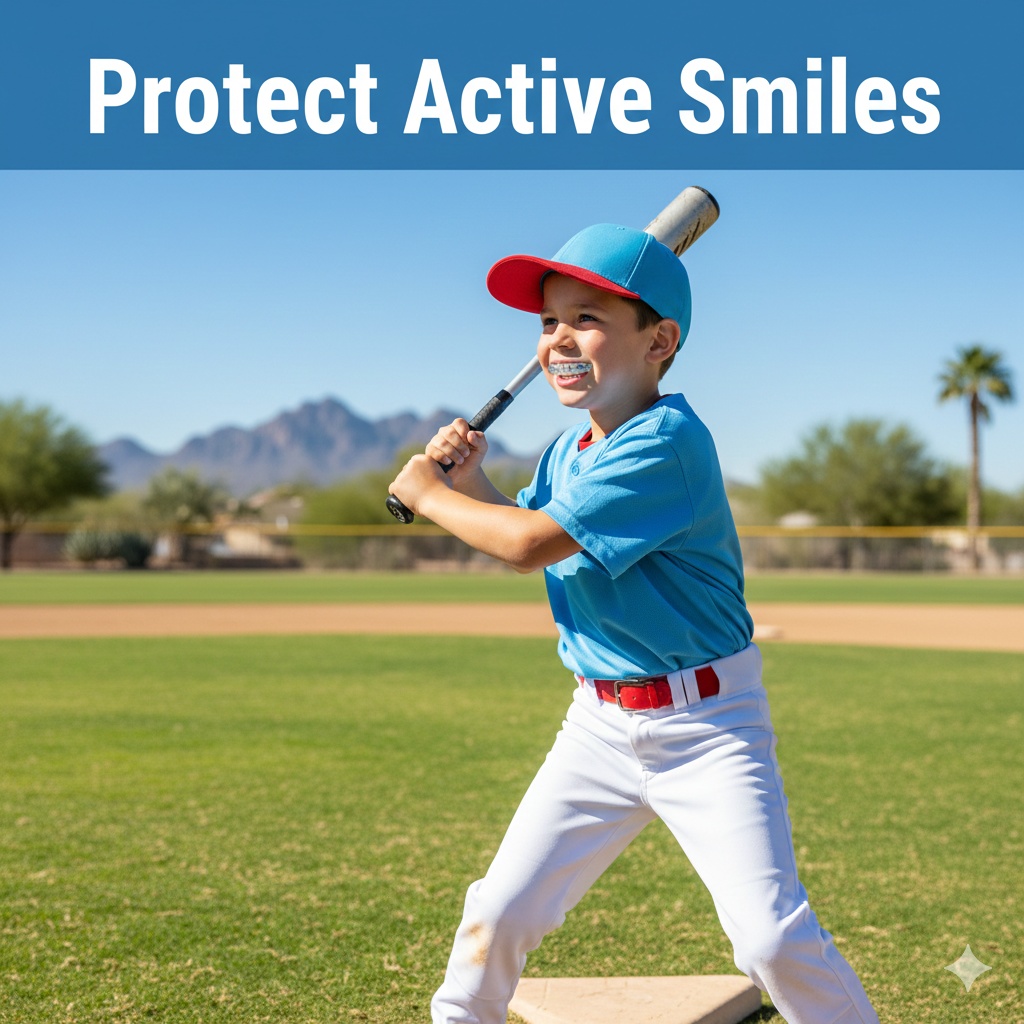
Here’s what protects them:
- Custom mouthguards: While over-the-counter mouthguards are better than nothing, custom mouthguards are definitely the best option. They are particularly needed by those who play contact sports.
- Helmets with face protection: For sports like skateboarding or biking, helmets protect not only the head.
- Proper Supervision: Young children need supervision during playground playtime, especially when using climbing equipment.
A properly fitted mouthguard can help prevent more than 200,000 mouth injuries each year. As the ADA states, the expense is well worth it compared to emergency dental procedures.
The Sports Drink Problem
What do most kids grab after practicing at a park or playing in Old Town? They go for sports drinks. These drinks boast hydration but damage teeth.
Sports drinks have high sugar and acid content. This combination leads to enamel loss and creates an ideal environment for cavity development. In addition, a 20-ounce bottle may contain as much as 34 grams of sugar, which is more than an entire day’s recommended allowance for children.
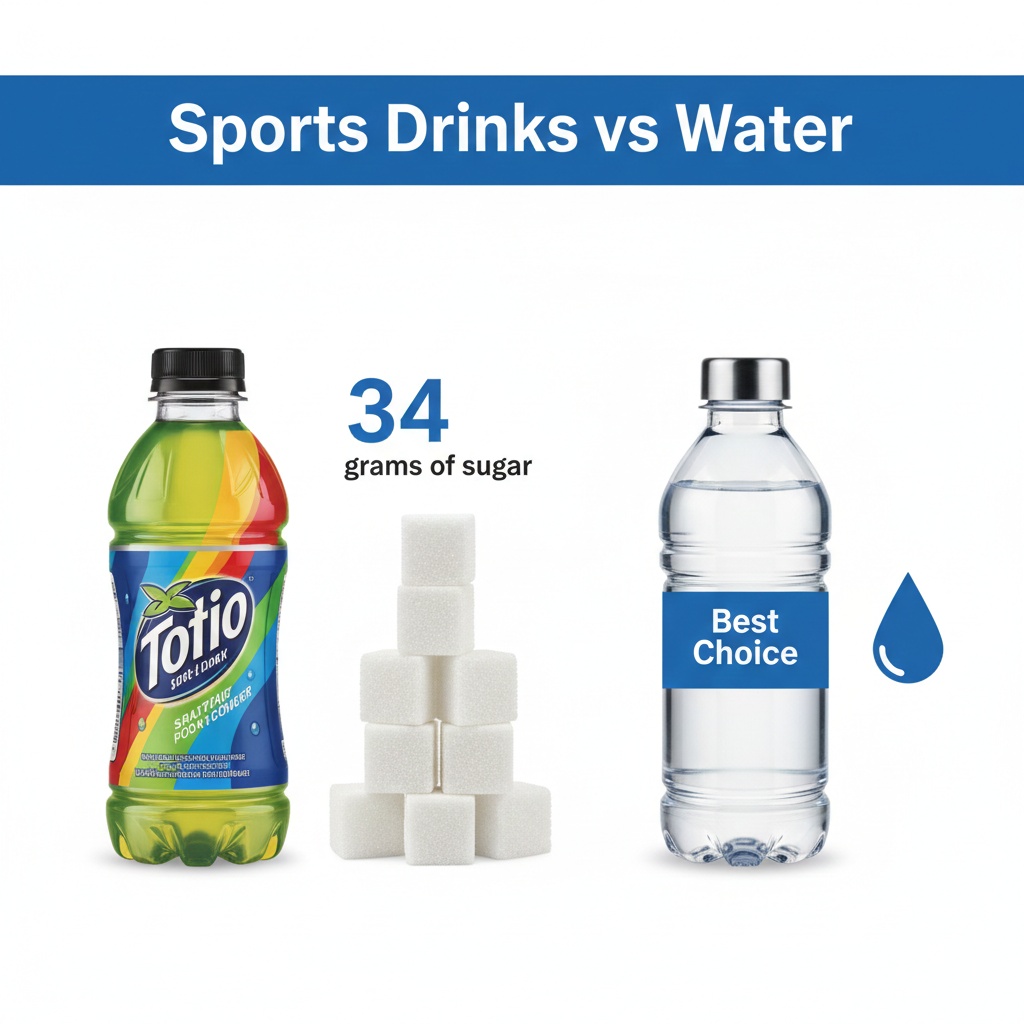
Water will always remain the best choice. If your child demands a sports drink after strenuous physical activities:
- Only consume it during or right after exercising
- Have them drink it quickly instead of sipping over time
- Rinse their mouth with water afterwards
- Never allow them to go to bed with sports drink residue on their teeth
The heat here in Arizona requires kids to keep hydrated at all times. Yet constant exposure to sugary drinks can cause significant harm. Water can quench their thirst without harming their teeth.
What Parents Miss During Routine Care
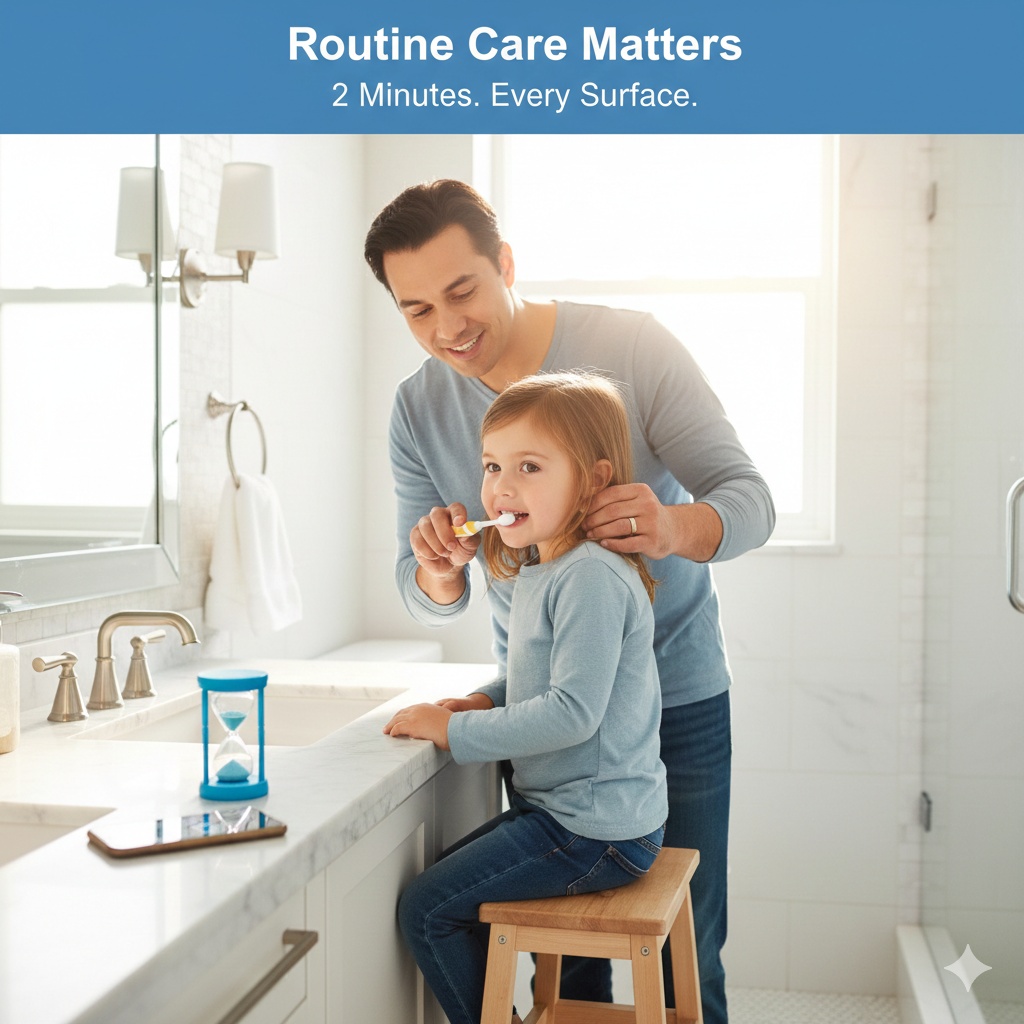
Children are told to brush their teeth twice a day, but most do not do so correctly, especially younger children. They do not take their time while brushing, do not clean the back molars, and forget to floss. Most kids develop the required dexterity by age 8 and can brush their teeth independently, but until age 10 or 11, they still need adult supervision.
Check these basics:
- Are they brushing their teeth for two full minutes? Help them pace this with a timer or song!
- Are they brushing all surfaces? The front, back, and chewing surfaces all need to be brushed.
- Is flossing done daily? This is where most families are failing.
- How recently was their last dental checkup? According to the American Dental Association, checkups are recommended every six months.
Fluoride helps strengthen enamel and prevent tooth decay. Drinking fluoridated water is encouraged, but not all children rely solely on tap water for hydration. If you rely on bottled water for your child’s consumption, consult your dentist in Scottsdale, AZ, for further assistance.
Sealants are another preventive measure that most parents are unaware of. Sealants are thin coatings that are typically applied to the surfaces of back teeth, where tooth decay most often begins. Applying them does not hurt. They can last for many years.
Building Habits That Stick
February is the reminder, but dental health doesn’t end on March 1st. The habits you make now are the habits your child will have for decades to come.
It is best to make dental care a routine rather than a reactive approach, meaning getting checkups before problems arise. Most problems experienced by children are completely preventable.
Nutrition plays a greater role than most parents realize—avoid sticky, sugary snacks between meals. Crackers, fruits, and gummy candies stick to children’s teeth, providing bacteria with their next snack. Fresh fruits, vegetables, cheese, and nuts are better options.
Making Dental Visits Less Stressful
Children fear going to the pediatric dentist, especially if the fear stems from stories they heard or experiences they have had. That’s about to change.
It is recommended that a dental practice specializing in children’s dentistry or with a friendly demeanor towards children be chosen. This is because not all dental clinics are child-friendly. The environment in which children receive dental treatment is critical. Kid-friendly waiting rooms, friendly staff members with children-oriented approaches, and pediatric dentists who communicate are important.
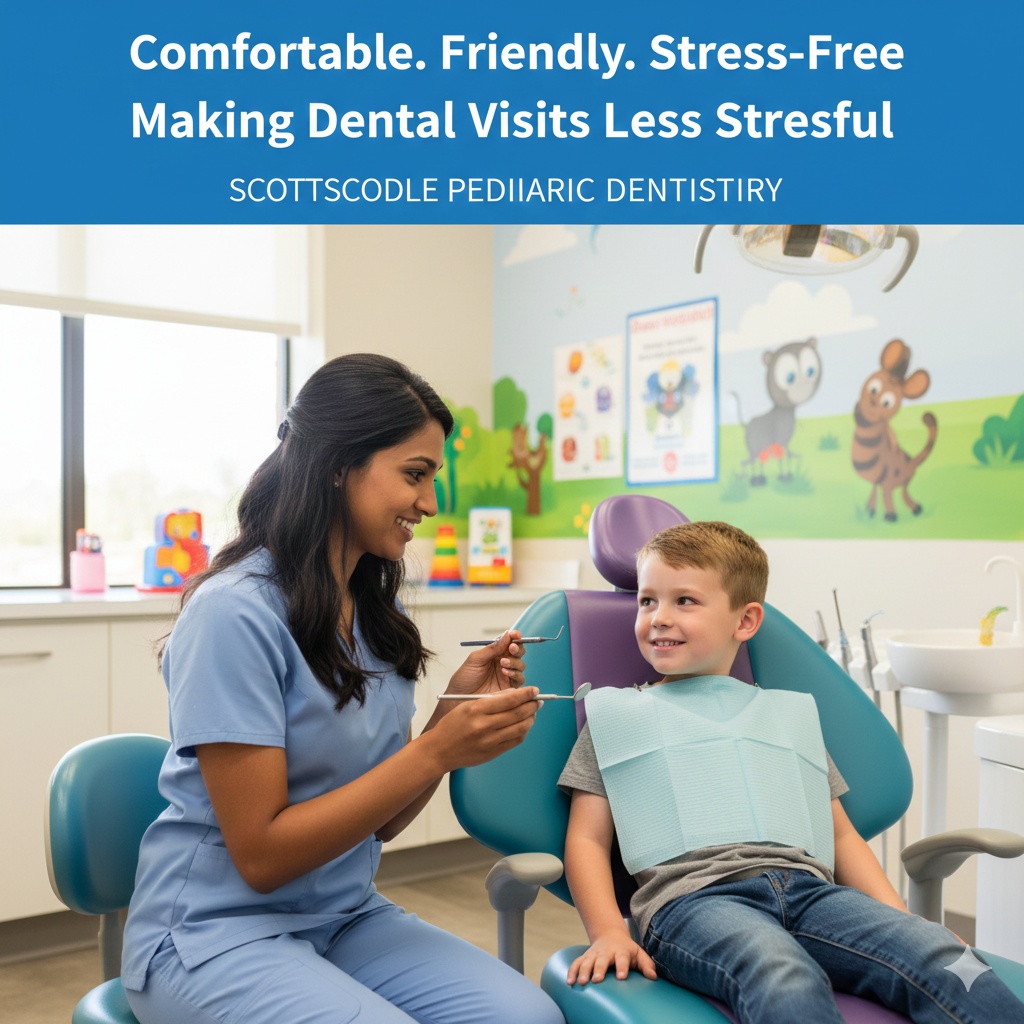
Start dental visits early. The ADA recommends that a child visit a pediatric dentist for the first time at age 1 or within 6 months of their first tooth.
Don’t use the word dentist as a threat. Saying things like “If you don’t brush your teeth, you’ll need to visit the dentist and get your teeth drilled” frightens the kids unnecessarily. Teach them that visiting the dentist is part of health care.
Keep Your Child’s Smile Protected All Year
Healthy teeth support confident, proud smiles, clear speech, and wholesome nutrition. They are worth protecting, and this February, let National Children’s Dental Health Month 2026 in Scottsdale be your children’s kick-off point for better habits, safer sports, and better dental health.
At Douglas Family Dentistry, we recognize Scottsdale families’ need for dental care that fits their lifestyle, and we’re here to help you give your children healthy, happy smiles through every season, every sport, and every stage of development.
Schedule Your Child’s Checkup Today

Don’t wait until you’re in a dental emergency. Douglas Family Dentistry offers comprehensive dental care for kids in a friendly setting. Whether it’s time for a cleaning or you need a sports guard, we’re the family you can depend on. To schedule an appointment with our dentist in Scottsdale, AZ, for your child, call us today.
Common Questions People Ask
When should my child first visit the pediatric dentist?
A child’s first visit to the dentist should be arranged before the age of one, or shortly after the arrival of the child’s first tooth.
How often do children need dental checkups?
Children should see a dentist once every six months. Children at higher risk of cavities may need to visit the dentist more often. Again, your child’s dentist can tell you the appropriate timing for your child.
Are sports drinks really that harmful to teeth?
Yes. Sports drinks are high in sugars and acids, which damage tooth enamel and lead to cavities. Water is the best rehydration drink. If a child is taking sports drinks, they can be consumed during sporting activities and washed down with water afterward.
Does my child really need a mouthguard for non-contact sports?
Activities like skateboarding, biking, and gymnastics, among others, also pose risks of facial injuries, especially when there is even the slightest likelihood of falling. A mouthguard is essential in such cases. Custom-fit mouthguards can be obtained from a dentist.