

By Douglas Family Dentistry
Too many Scottsdale residents are living with missing teeth — not because implants won’t work for them, but because of misinformation. The 5 dental implant myths that are keeping you toothless in Scottsdale are more common than you might think. At Douglas Family Dentistry, Dr. Paul D. Douglas hears these myths every week. It’s time to separate fact from fiction so you can make a confident, informed decision about your smile.
Why Dental Implant Myths Are So Harmful
Myths about dental implants don’t just spread misinformation — they delay life-changing treatment. Missing teeth affect your ability to chew, speak clearly, and feel confident in social situations. Bone loss can also accelerate when a tooth root is absent for too long. The longer you wait based on false beliefs, the more complex your treatment may become.
Scottsdale patients deserve accurate information from a trusted local dental team. Understanding the truth behind common implant myths can open the door to a healthier, more complete smile. Let’s break down the five biggest myths — and replace them with facts.
Myth #1 and #2 — Implants Are Too Painful and They Look Fake
Myth #1: Dental implants are extremely painful. Many patients assume the procedure involves unbearable discomfort. The reality is that most people report less pain than they expected. Dr. Douglas uses modern anesthetic techniques to keep you comfortable throughout the entire process.
Most patients describe post-procedure soreness as mild to moderate. Over-the-counter pain relievers are often enough for recovery. The discomfort typically fades within a few days. Compare that to the daily discomfort of living with a gap in your smile — implants win easily.
Myth #2: Implants look fake or unnatural. This myth likely comes from outdated images of poorly fitted dentures. Modern dental implants are custom-designed to match your surrounding teeth in color, shape, and size. Nobody will know your implant isn’t a natural tooth unless you tell them.
Here’s what makes today’s implants look so realistic:
- Custom-shaded porcelain crowns match your natural tooth color precisely
- The crown is shaped to blend seamlessly with adjacent teeth
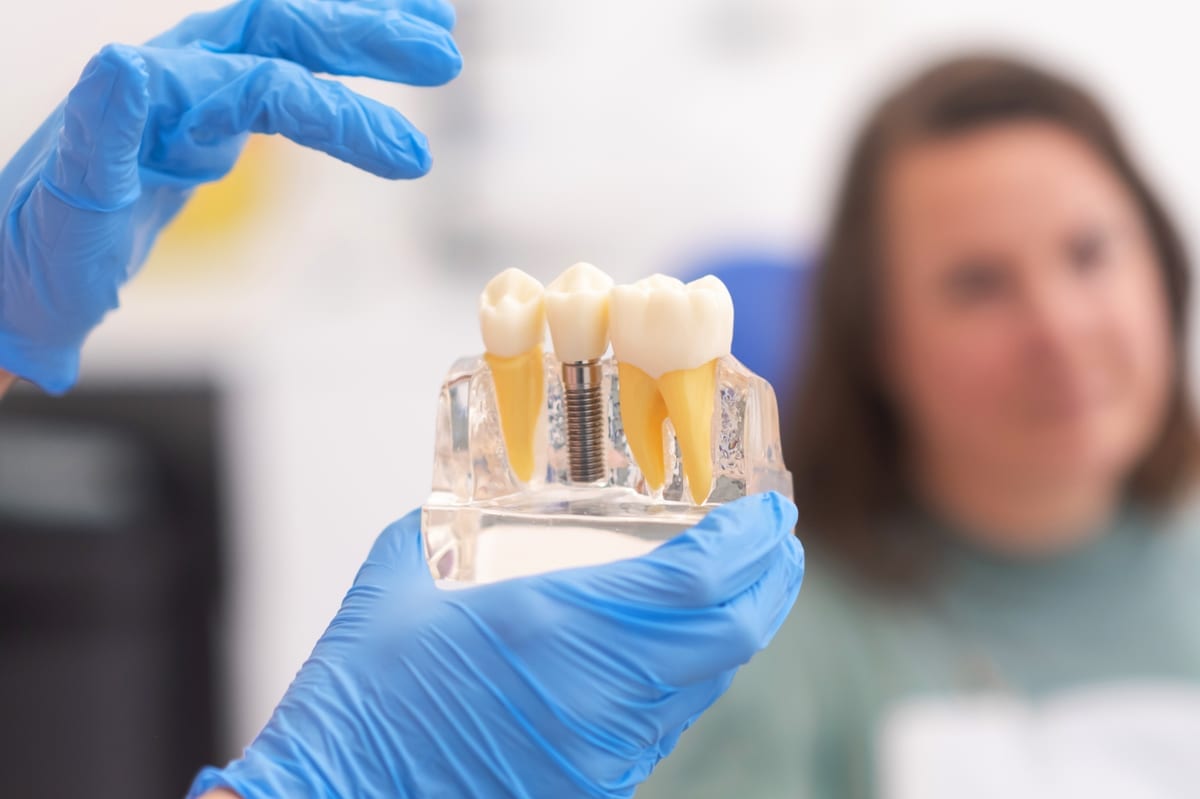
- The implant post integrates with your jawbone for a natural feel
- No movement, slipping, or clicking like traditional removable options
Myth #3 and #4 — I’m Too Old and They’re Too Expensive
Myth #3: I’m too old for dental implants. Age alone is almost never a disqualifying factor for dental implants. What matters most is the health of your jawbone and your overall general health. Many patients in their 70s and 80s successfully receive implants every year.
Dr. Douglas evaluates each patient as an individual — not just a number. A thorough health review determines whether implants are appropriate for you. If bone density is a concern, options like bone grafting can prepare the site for a successful implant. Being older doesn’t mean you’re out of options.
Myth #4: Dental implants cost too much to be worth it. Upfront, implants do cost more than some alternatives like dentures. However, implants are a long-term investment that often lasts decades with proper care. Removable options require frequent replacements and maintenance costs that add up quickly over time.
Consider these financial realities of choosing implants:
- Implants can last 20 or more years with regular care
- No adhesives, soaking solutions, or replacement parts needed
- Preserved jawbone reduces the risk of costly future procedures
- A single implant protects neighboring teeth from shifting and damage
When you factor in long-term value, implants often make excellent financial sense. Many patients consider it one of the best investments they’ve made in their health. Our team at Douglas Family Dentistry can walk you through your options in detail.
Myth #5 — Dental Implants Require Constant Special Care
Myth #5: Implants need complicated or special maintenance routines. This myth leads many patients to believe implants are high-maintenance. In truth, caring for implants is nearly identical to caring for natural teeth. You brush, floss, and attend regular dental check-ups — that’s it.
There are no overnight soaking rituals or special adhesives to manage. Your implant won’t decay like a natural tooth can, but the surrounding gum tissue still needs attention. Consistent oral hygiene protects the gum and bone around your implant long-term. Routine visits to Douglas Family Dentistry keep everything on track.
It’s also worth noting that implants support your overall oral health beyond the implant site. They preserve jawbone density that would otherwise deteriorate after tooth loss. They prevent neighboring teeth from drifting out of alignment. Implants contribute to a healthier mouth — not a more complicated one.
What to Expect at Douglas Family Dentistry in Scottsdale
Dr. Paul D. Douglas brings both expertise and empathy to every implant consultation. He understands that making this decision involves real concerns — and he takes the time to address every one of them. Patients in Scottsdale never feel rushed or pressured during their appointments.
Your implant journey typically includes these key stages:
- Consultation and imaging: A full evaluation of your bone density, gum health, and bite
- Treatment planning: A customized plan tailored to your specific needs and goals
- Implant placement: A minor surgical procedure performed with local anesthesia
- Healing period: The implant fuses with your jawbone over several months
- Crown placement: Your custom crown is attached for a complete, natural-looking result
In addition to implants, Douglas Family Dentistry offers a full range of services. If you need Root Canal Treatment alongside your implant work, our team handles it all under one roof. We also offer Cosmetic Dentistry services to enhance your smile beyond just tooth replacement. Our Scottsdale patients love the convenience of comprehensive care in one trusted location.
Stop Letting Myths Decide Your Dental Health
The 5 dental implant myths that are keeping you toothless in Scottsdale have one thing in common — none of them are true. Pain, age, appearance, cost, and maintenance concerns are all manageable with modern implant dentistry. You deserve to eat, speak, and smile with full confidence again. Don’t let outdated fears stand between you and a healthier life.
Dr. Paul D. Douglas and the Douglas Family Dentistry team are here to answer every question honestly and thoroughly. Your journey to a complete smile starts with a single conversation. Book Now to schedule your appointment with our team.
Frequently Asked Questions
Are dental implants safe for older patients in Scottsdale?
Yes, age is rarely a disqualifying factor for dental implants. Dr. Douglas evaluates each patient’s bone health and overall wellness individually. Many patients over 70 successfully receive implants. A thorough consultation determines the safest, most effective approach for your situation.
How long do dental implants last?
With proper oral hygiene and regular dental visits, dental implants can last 20 years or longer. The implant post itself is often permanent. The crown may eventually need replacement after many years of use. Consistent care is the key to maximizing implant longevity.
Do dental implants look different from natural teeth?
Modern implants are designed to match your natural teeth in color, shape, and size. The custom porcelain crown is carefully shaded to blend with surrounding teeth. Most people cannot tell the difference between an implant and a real tooth. The result is a natural-looking, confident smile.
Is the dental implant procedure painful?
Most patients report less discomfort than they anticipated. Local anesthesia keeps you comfortable during the procedure itself. Post-procedure soreness is typically mild and resolves within a few days. Over-the-counter pain relief is often all that is needed during recovery.
How do I care for dental implants after placement?
Caring for implants is very similar to caring for natural teeth. Brush twice daily, floss regularly, and attend scheduled dental check-ups. No special solutions or adhesives are required. Consistent oral hygiene protects the gum and bone around your implant for years to come.