

By Douglas Family Dentistry
Your jawbone is shrinking — and most people have no idea it’s happening. When you lose a tooth, the bone beneath it begins to deteriorate almost immediately. If you’ve been living with a missing tooth in Scottsdale and wondering whether implants are still an option, the warning signs matter. Waiting too long for implants can turn a straightforward procedure into a complex one. Knowing the five signs you’ve waited too long for implants in Scottsdale could save your smile — and your remaining teeth.
Why Jawbone Loss Happens After Tooth Loss
Your tooth roots do more than hold teeth in place. They constantly stimulate your jawbone through biting and chewing. That stimulation signals your body to keep sending nutrients to the bone. Without a root, that signal disappears — and bone resorption begins within weeks.
Studies show patients can lose up to 25% of jawbone width in the first year after extraction. Over time, this loss accelerates. The longer a tooth stays missing, the less bone remains to anchor an implant. This is the core reason dentists at Douglas Family Dentistry encourage patients not to delay.
Bone loss isn’t just a cosmetic issue. It changes the shape of your face, affects chewing function, and complicates future treatment. Understanding what’s happening beneath the surface helps you make better decisions about your care.
Five Warning Signs You’ve Already Waited Too Long for Implants in Scottsdale
Not everyone notices bone loss right away. These warning signs often appear gradually. Recognizing them early gives you the best chance of a successful implant outcome — sometimes with bone grafting to restore lost volume.
- Sunken or collapsed facial appearance: When bone shrinks, the soft tissue around it follows. Cheeks may look hollow and lips may appear thinner than before.
- Shifting or drifting teeth: Neighboring teeth lose their anchor point. They begin leaning or tilting into the empty space over months or years.
- Difficulty chewing on one side: Bone loss weakens the ridge that supports chewing forces. Patients often unconsciously favor the opposite side of their mouth.
- Loose or ill-fitting dentures: Dentures rely on the gum ridge for stability. As bone shrinks, dentures fit less securely and may slip during eating or speaking.
- Changes in your bite or jaw pain: When teeth shift and bone volume decreases, your entire bite alignment can change. This creates jaw strain and discomfort over time.
If any of these signs feel familiar, your jawbone has likely been shrinking for a while. That doesn’t mean implants are off the table — but it does mean time is a factor now.
What Happens When You Wait Too Long
Dental implants require a certain amount of healthy bone to integrate successfully. When bone loss is significant, a bone graft becomes necessary before implant placement. Grafting adds steps, recovery time, and complexity to your treatment journey.
In more severe cases, bone loss may affect the sinus cavities — particularly in the upper jaw. A procedure called a sinus lift may be needed to create enough space for implants. These are still very manageable treatments, but they take more time than an implant placed promptly after extraction.
Beyond implant readiness, untreated bone loss affects neighboring teeth. Shifting teeth become harder to clean. Misalignment increases the risk of decay and gum disease. In some cases, teeth that might have been saved with early treatment require Root Canal Treatment or even extraction because of complications from delayed care.
The message is straightforward: every month you wait costs you something — either bone volume, tooth stability, or treatment simplicity.
Can You Still Get Implants If Bone Loss Has Occurred?
Yes — and this is important to understand. Significant bone loss does not automatically disqualify you from dental implants. Modern dentistry has advanced techniques to rebuild bone volume before or during implant placement.
Bone grafting uses either your own bone, donor material, or synthetic material to restore lost jaw structure. After healing, this creates a stable foundation for implant posts. Dr. Paul D. Douglas evaluates each patient individually to determine the best path forward.
Some patients also explore Veneers or other restorative options for visible teeth affected by shifting. A comprehensive evaluation helps map out a treatment plan that addresses every concern — not just the missing tooth.
The key is getting that evaluation sooner rather than later. The more bone that remains, the more options you have and the simpler your treatment path will be.
What the Implant Process Looks Like at Douglas Family Dentistry
Understanding what to expect helps remove the anxiety around implant treatment. At Douglas Family Dentistry in Scottsdale, the process is thorough, comfortable, and patient-centered from start to finish.
- Comprehensive evaluation: Dr. Douglas reviews your dental and medical history, examines your jaw, and uses imaging to assess bone volume and identify any complications.
- Treatment planning: A personalized plan is created. If bone grafting is needed, that phase is mapped out clearly with realistic timelines.
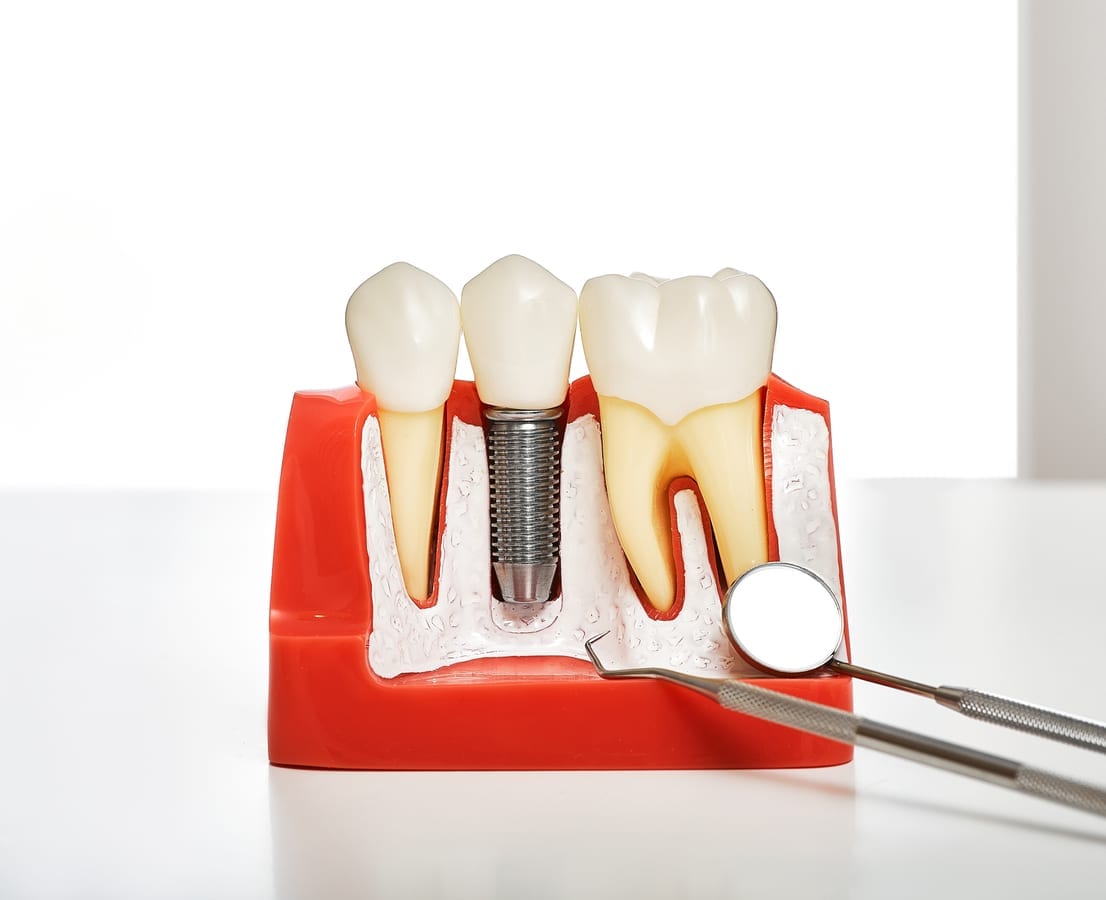
- Implant placement: The titanium post is placed into the jawbone under local anesthesia. Most patients are surprised by how comfortable the procedure feels.
- Healing and integration: The implant fuses with bone over several months. This process — called osseointegration — is what makes implants so durable and stable.
- Crown placement: A custom-made crown is attached to the implant, completing your restoration with a natural-looking result.
Every step is explained clearly so patients feel informed and confident. The goal is never just to place an implant — it’s to give you a functioning, beautiful smile that lasts for decades.
Don’t Wait for Pain to Be Your Motivation
One of the most common reasons people delay implants is that bone loss doesn’t hurt. There’s no sharp pain warning you that your jaw is shrinking. By the time discomfort, shifting, or facial changes appear, significant damage has already occurred.
Scottsdale patients who come in proactively — before symptoms become severe — consistently have simpler, faster, and more successful implant experiences. Waiting for pain means waiting for more bone loss, more complexity, and potentially more treatment steps.
You don’t have to figure this out alone. Dr. Paul D. Douglas and the team at Douglas Family Dentistry are here to assess your situation honestly and guide you toward the best possible outcome — without pressure, without judgment, and with full transparency about your options.
If you recognize any of the five warning signs in yourself, now is the right time to take action. Book Now to schedule your appointment with our team.
Frequently Asked Questions
How quickly does jawbone loss begin after a tooth extraction?
Bone resorption begins within weeks of losing a tooth. Research shows that up to 25% of bone width can be lost in the first year alone. The process continues gradually over time if the gap is not filled with an implant or other restoration that stimulates the bone.
Can bone loss be reversed before getting dental implants?
Yes — bone grafting is a well-established procedure that restores lost jaw volume before implant placement. Dr. Paul D. Douglas evaluates the degree of bone loss and recommends grafting when necessary. While it adds steps to the process, it makes successful implant integration possible even after significant loss.
Are dental implants painful to get?
Most patients report that implant placement is more comfortable than they expected. Local anesthesia is used throughout the procedure. Some mild soreness and swelling may occur in the days following surgery, but this is typically manageable with over-the-counter pain relief and resolves quickly.
What if I’ve had missing teeth for many years — am I still a candidate for implants?
Many long-term tooth loss patients are still excellent implant candidates. A thorough evaluation including bone density imaging helps Dr. Douglas determine whether bone grafting is needed first. Even in cases with significant resorption, modern techniques can often rebuild enough bone to support implants successfully.
How are dental implants different from dentures or bridges?
Implants are the only tooth replacement option that stimulates the jawbone like a natural tooth root. Dentures and bridges restore appearance and function but do not prevent ongoing bone loss beneath them. Implants integrate with the bone itself, providing stability, preserving jaw structure, and offering a long-term solution that feels and functions like a natural tooth.